
90 Days CBSE Class 10 Exam 2027 Workshop: The Best CBSE Class 10 Crash Course for Science & Maths
The 90 Days CBSE Class 10 Exam 2027 Workshop at Ignescent Gurukul is purpose-built for students and parents searching for the Best CBSE Class 10 Crash Course, a high-impact CBSE Class 10 Science Crash Course, or a precision CBSE Class 10 Maths Crash Course. Instead of rushing through passive lecture slides like an ordinary CBSE Class 10 Crash Course, our signature CBSE Crash Course workshop model runs in a single dedicated evening batch (Monday to Friday, 5:30 PM to 8:30 PM IST) starting 16 November 2026, covering both Mathematics and Science every day in strict NCERT chapter sequence with 100% live problem-solving, Saturday 40-mark taught-portion tests, Sunday 80-mark Full-Syllabus Tests (39 tests total), and February 2027 Exam Gap Workshops.
Book Your Seat in the 90 Days CBSE Class 10 Exam 2027 Workshop (Best CBSE Class 10 Crash Course)
Reserve your spot in the single 5:30 PM – 8:30 PM evening batch (starts 16 November 2026) or enrol in the 39-Test / 12-FST Mock Series.
Why Our 90 Days CBSE Class 10 Exam 2027 Workshop Outperforms Any Traditional CBSE Class 10 Crash Course
Every November, thousands of Class 10 students search for the Best CBSE Class 10 Crash Course, a CBSE Class 10 Crash Course, or a Class 10 Crash Course hoping to fix six months of conceptual gaps before the February board exams. Yet standard crash courses merely compress nine months of one-way theory lectures into fast-forwarded slides—leaving students with zero writing stamina when they face the 50% competency-focused CBSE board paper. At Ignescent Gurukul, our signature 90 Days CBSE Class 10 Exam 2027 Workshop is a next-generation evolution of the Best CBSE Class 10 Crash Course: a 100% practice-led, mentor-audited CBSE Class 10 Science Crash Course and CBSE Class 10 Maths Crash Course training floor where every concept is learned, cross-questioned, written, and evaluated inside class.
| Evaluation Parameter | Ordinary CBSE Class 10 Crash Course | Ignescent Gurukul’s 90 Days CBSE Class 10 Exam 2027 Workshop (Best CBSE Class 10 Crash Course Upgrade) |
|---|---|---|
| Pedagogical Core | Passive, high-speed lecture summaries; students copy notes and postpone actual problem solving to home. | 100% In-Class Practice Workshop: Every concept in our CBSE Class 10 Science Crash Course and CBSE Class 10 Maths Crash Course is immediately drilled via live Class Based Practice (CBP), daily Class Based Tests (CBT), and oral cross-questioning. |
| Batch Structure & Timing | Multiple fragmented batches, irregular subject rotation, and overcrowded 50–200 student rooms/webinars. | Single Focused Evening Batch (Mon–Fri, 5:30 PM – 8:30 PM IST): 1.5 hrs Mathematics + 1.5 hrs Science every weekday in strict NCERT sequence (max 10 students per batch). |
| Syllabus & Source Coverage | Selective “important topics” that fail when CBSE sets multi-concept competency case studies. | 100% Concept Coverage: Every NCERT Textbook line, NCERT Exemplar problem, CBSE Competency-Focused Questions, and new 2027 probable board questions. |
| Weekly Assessment Rigour | Occasional generic MCQ quizzes without descriptive step-marking feedback. | Every Saturday (40M Science 1.5 Hr + 40M Maths 1.5 Hr CT–FFTs) on Monday–Friday taught portions + Every Sunday 80M 3-Hr FST (Total 39 Mock Tests). |
| Answer Copy Evaluation | Automated scorecards or unchecked subjective sheets. | Board-Level Copy Checking: Line-by-line audit of Given/To Prove steps, ray-diagram arrows, chemical physical states, units, and significant figures. |
| Board Exam Gap Support (Feb 2027) | Course ends in January; students are left alone during the crucial days right before the board papers. | Phase 2 Exam Gap Workshops Included: Expert-guided self-study sprints for Maths (8–15 Feb 2027) and Science (18–21 Feb 2027) to eliminate errors and maximise marks. |
Best CBSE Class 10 Crash Course vs Signature 90-Day Workshop Methodology
When students look for the Best CBSE Class 10 Crash Course, their real goal is jumping from 60–75% in school pre-boards to 95–100% in the final Central Board of Secondary Education (CBSE) examination. Our 90 Days CBSE Class 10 Exam 2027 Workshop achieves that transformation by replacing passive listening with supervised writing—ensuring no student leaves the 5:30 PM to 8:30 PM session with an unverified formula, half-drawn diagram, or unpractised theorem proof.
Daily Dual-Subject Rhythm (CBSE Class 10 Maths Crash Course + Science Every Weekday)
Unlike a conventional CBSE Class 10 Crash Course that teaches Science only two days a week and Maths two days a week, our 90 Days CBSE Class 10 Exam 2027 Workshop trains both subjects every single day from Monday to Friday (90 minutes of our CBSE Class 10 Maths Crash Course + 90 minutes of our CBSE Class 10 Science Crash Course). This high-frequency cognitive touch keeps algebra, geometry, physics, chemistry, and biology active simultaneously.
Universal Pan-India & NRI CBSE Crash Course Alignment
Whether you attend a CBSE-affiliated school in Delhi NCR, Mumbai, Bengaluru, Hyderabad, Pune, Chennai, Kolkata, or a CBSE Gulf/International school in Dubai, Sharjah, Abu Dhabi, Doha, Muscat, Riyadh, or Singapore, our universal Best CBSE Class 10 Crash Course workshop follows the exact CBSE 2026–27 Curriculum and marking scheme.
Inside Our 100% Practice Architecture: CBP, CBT, Cross-Questioning, CT–FFT, FST & Board Copy Checking
Every minute of the 90 Days CBSE Class 10 Exam 2027 Workshop—widely trusted as the Best CBSE Class 10 Crash Course alternative—follows a seven-stage closed-loop learning cycle designed so that conceptual understanding converts directly into board-ready answer scripts. Explore how our CBSE coaching methodology eliminates silly errors before 16 February 2027.
NCERT + Exemplar + Competency + 2027 Probable Questions
We solve 100% of NCERT in-text and back exercises, NCERT Exemplar problems, official CBSE Competency-Focused items, and curated 2027 probable board questions.
Class Based Practice (CBP) & Class Based Tests (CBT)
Within every 5:30 PM – 8:30 PM session of our 90 Days CBSE Class 10 Exam 2027 Workshop, students write timed CBP problem sets and 15-minute CBT micro-tests so retrieval speed is built in real time.
Live Oral Cross-Questioning of Every Concept
Faculty challenge students with “Why does this happen?”, “What if the sign changes?”, and “Which law governs step 2?”—exposing rote memorisation and preparing students for Assertion-Reason traps.
Saturday 40M Science (1.5h) + 40M Maths (1.5h) Tests
Every Saturday is dedicated to two 90-minute, 40-mark Chapter-wise / Cumulative Fast-Track Tests (CT–FFTs) strictly on the portions taught from Monday to Friday, plus 3 portal cumulative CT–FFTs (27 total).
12 Full-Syllabus Board Simulations (6 Sci + 6 Maths)
Every Sunday from 22 Nov 2026 to 7 Feb 2027, students sit for a 3-hour, 80-mark Full-Syllabus Test (FST) replicating the exact 10:30 AM – 1:30 PM CBSE examination format.
Board-Level Answer-Script Copy Checking
Every CT–FFT and FST answer booklet is checked against official CBSE step-marking rubrics—penalising missing state symbols, unlabelled ray arrows, omitted theorem citations, or missing final units.
February 2027 Exam Gap Guided Self-Study
Right before the actual board exams, our Maths Exam Gap Workshop (8–15 Feb 2027) and Science Exam Gap Workshop (18–21 Feb 2027) provide 6–12 hours/day of mentor-guided error removal.
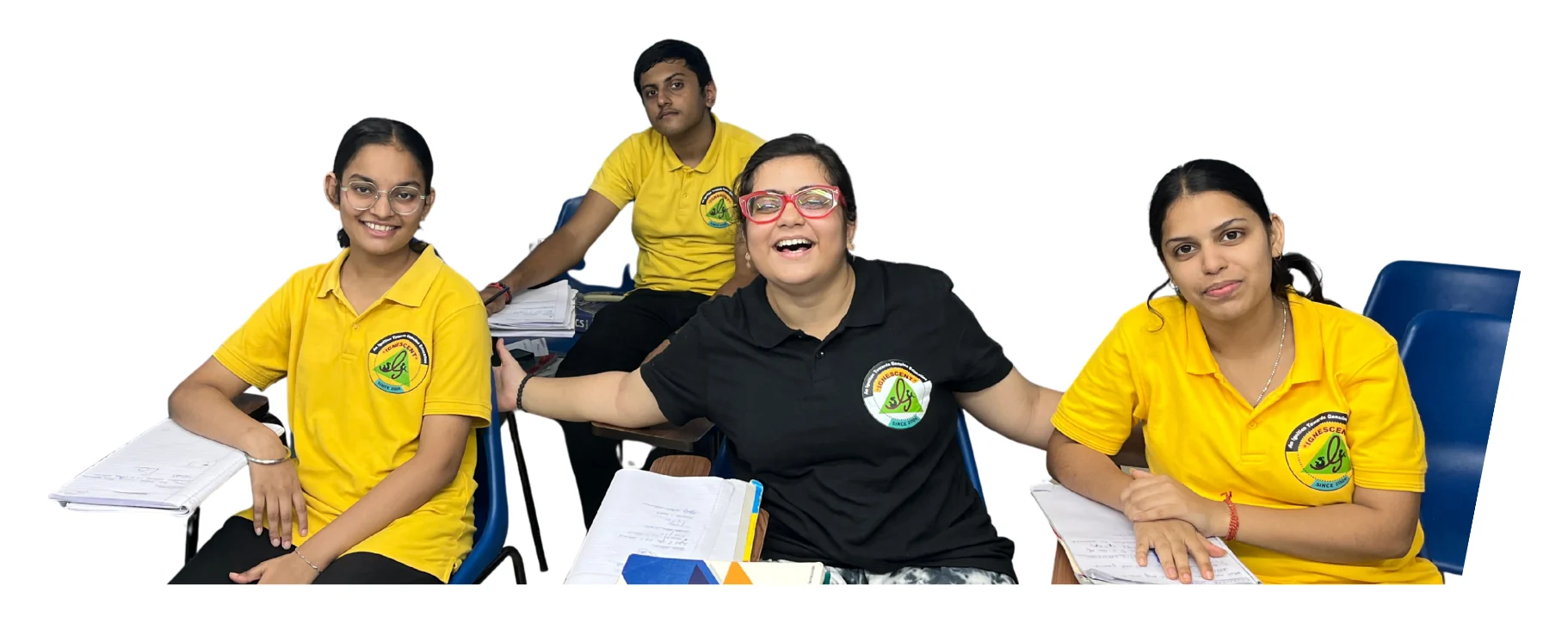
Small-batch interactive practice in our Best CBSE Class 10 Crash Course workshop with individual copy checking.
CBSE Class 10 Science Crash Course (086): 2027 Syllabus, 80-Mark Blueprint & 14 Practicals
Our embedded CBSE Class 10 Science Crash Course inside the 90 Days CBSE Class 10 Exam 2027 Workshop is engineered strictly from the official CBSE Class 10 Science (086) Syllabus 2026–27. Every weekday for 90 minutes, students enrolled in this CBSE Class 10 Science Crash Course master Chemical Substances (25 Marks), World of Living (25 Marks), Natural Phenomena (12 Marks), Effects of Current (13 Marks), and Natural Resources (5 Marks), alongside all 14 prescribed practical experiments that generate high-weightage observation, precaution, and case-study questions in the 80-mark theory paper.
CBSE Class 10 Science Crash Course Unit-Wise Marks & Deleted/Formative Boundaries
To maximise marks in the CBSE Class 10 Science Crash Course, students must know both what is tested in the 80-mark board examination and which chapters/sub-topics are restricted by CBSE to formative/portfolio assessment only:
- Unit I: Chemical Substances — Nature and Behaviour (25 Marks): Covers Ch 1 Chemical Reactions and Equations, Ch 2 Acids, Bases and Salts, Ch 3 Metals and Non-metals, and Ch 4 Carbon and its Compounds. Official CBSE Note: Periodic Classification of Elements is excluded from the 80-mark board paper.
- Unit II: World of Living (25 Marks): Covers Ch 5 Life Processes, Ch 6 Control and Coordination in Animals and Plants, Ch 7 Reproduction, and Ch 8 Heredity. Official CBSE Note: Evolution is excluded from the 80-mark board theory paper; Human Sex Determination is tested as a brief statement.
- Unit III: Natural Phenomena (12 Marks): Covers Ch 9 Light — Reflection and Refraction and Ch 10 The Human Eye and the Colourful World (excluding colour of the sun at sunrise and sunset).
- Unit IV: Effects of Current (13 Marks): Covers Ch 11 Electricity and Ch 12 Magnetic Effects of Electric Current (Right-Hand Thumb Rule, Fleming’s Left-Hand Rule, DC vs AC, Domestic Electric Circuits; excluding Electric Motor, Electromagnetic Induction & Electric Generator).
- Unit V: Natural Resources (05 Marks): Covers Ch 13 Our Environment (Ecosystems, Food Chains/Webs, 10% Law, Ozone Depletion, Waste Production & Biodegradable vs Non-biodegradable substances).
CBSE Class 10 Science Crash Course Question Paper Design (2026–27 Official Weightage)
Per the official CBSE 2026–27 Science curriculum, the 80-mark theory paper in our CBSE Class 10 Science Crash Course features ~33% internal choice and evaluates three distinct cognitive competencies via MCQs, Assertion-Reason, Short Answer (SA-I & SA-II), Long Answer (LA), and Source/Case-Based Integrated Questions:
| Competency Domain (Science 086) | Weightage (%) | Marks (Out of 80) |
|---|---|---|
| 1. Demonstrate Knowledge and Understanding (State, define, recall, identify, explain laws/equations) | 50% | 40 Marks |
| 2. Application of Knowledge / Concepts (Apply laws to unfamiliar circuits, ray setups, chemical tests) | 30% | 24 Marks |
| 3. Formulate, Analyze, Evaluate and Create (Experimental design, data tables, multi-step inference) | 20% | 16 Marks |
| Total Theory + Internal Assessment (5+5+5+5) | 100% | 80 + 20 = 100 Marks |
Internal Assessment (20 Marks) Support: Periodic Assessment (5M) + Multiple Assessment (5M) + Subject Enrichment Practical Work (5M) + Portfolio (5M).
| Unit & Marks | CBSE Class 10 Science Crash Course — NCERT Chapters & Core Concepts | Prescribed CBSE Practical Experiments Integrated (All 14 Experiments) | Workshop Target Marks |
|---|---|---|---|
| Unit I: Chemical Substances (25 Marks) |
Ch 1: Chemical Equations, Balanced Equations, Combination, Decomposition, Displacement, Double Displacement, Precipitation, Endothermic/Exothermic, Oxidation & Reduction. Ch 2: H+ & OH- ions, pH scale & everyday life, NaOH, Bleaching powder, Baking soda, Washing soda, Plaster of Paris. Ch 3: Metals & Non-metals properties, Reactivity series, Ionic compounds, Basic metallurgy, Corrosion & prevention. Ch 4: Covalent bonding, Versatile nature of carbon, Homologous series, Functional groups nomenclature, Combustion/Oxidation/Addition/Substitution, Ethanol & Ethanoic acid, Soaps & Detergents. |
Exp 1: Finding pH of samples using pH paper/universal indicator & studying properties of HCl and NaOH. Exp 2: Performing & observing (a) Quicklime + water, (b) Heating FeSO4 crystals, (c) Fe nails in CuSO4, (d) Na2SO4 + BaCl2. Exp 3: Observing action of Zn, Fe, Cu & Al metals on salt solutions & arranging in decreasing reactivity. Exp 8: Studying odour, solubility, litmus effect & NaHCO3 reaction of Acetic Acid (Ethanoic acid). Exp 9: Comparative cleaning capacity of soap sample in soft and hard water. |
25 / 25 Marks |
| Unit II: World of Living (25 Marks) |
Ch 5: Living Being; Basic concepts of Nutrition, Respiration, Transport and Excretion in plants and animals. Ch 6: Tropic movements in plants; Plant hormones; Control and co-ordination in animals: Nervous system, Voluntary, involuntary and reflex action; Chemical co-ordination: animal hormones. Ch 7: Reproduction in animals and plants (asexual and sexual), Reproductive health — need and methods of family planning, Safe sex vs HIV/AIDS, Child bearing and women’s health. Ch 8: Heredity; Mendel’s contribution — Laws for inheritance of traits; Sex determination: brief introduction. |
Exp 6: Preparing a temporary mount of a leaf peel to show stomata. Exp 7: Experimentally show that carbon dioxide is given out during respiration. Exp 12: Studying (a) binary fission in Amoeba, and (b) budding in yeast and Hydra with prepared slides. Exp 14: Identification of the different parts of an embryo of a dicot seed (Pea, gram or red kidney bean). |
25 / 25 Marks |
| Unit III: Natural Phenomena (12 Marks) |
Ch 9: Reflection of light by curved surfaces; Images formed by spherical mirrors, centre of curvature, principal axis, principal focus, focal length, mirror formula (Derivation not required), magnification. Refraction; Laws of refraction, refractive index. Refraction of light by spherical lens; Image formed by spherical lenses; Lens formula (Derivation not required); Magnification; Power of a lens. Ch 10: Functioning of a lens in human eye, defects of vision and their corrections, applications of spherical mirrors and lenses. Refraction of light through a prism, dispersion of light, scattering of light, applications in daily life (excluding colour of the sun at sunrise and sunset). |
Exp 10: Determination of the focal length of (i) Concave mirror and (ii) Convex lens by obtaining the image of a distant object. Exp 11: Tracing the path of a ray of light passing through a rectangular glass slab for different angles of incidence; measure angle of incidence, refraction, emergence. Exp 13: Tracing the path of the rays of light through a glass prism. |
12 / 12 Marks |
| Unit IV: Effects of Current (13 Marks) |
Ch 11: Electric current, potential difference and electric current. Ohm’s law; Resistance, Resistivity, Factors on which the resistance of a conductor depends. Series combination of resistors, parallel combination of resistors and its applications in daily life. Heating effect of electric current and its applications in daily life. Electric power, Interrelation between P, V, I and R. Ch 12: Magnetic effects of current: Magnetic field, field lines, field due to a current carrying conductor, field due to current carrying coil or solenoid; Force on current carrying conductor, Fleming’s Left Hand Rule, Direct current, Alternating current: frequency of AC, Advantage of AC over DC, Domestic electric circuits. |
Exp 4: Studying the dependence of potential difference (V) across a resistor on the current (I) passing through it and determine its resistance; plot a graph between V and I. Exp 5: Determination of the equivalent resistance of two resistors when connected in series and parallel. |
13 / 13 Marks |
| Unit V: Natural Resources (05 Marks) | Ch 13: Our Environment: Eco-system, Environmental problems, Ozone depletion, waste production and their solutions. Biodegradable and non-biodegradable substances. | Case-study analysis on trophic energy transfer (10% Law), biological magnification in aquatic/terrestrial chains, and solid-waste segregation models. | 05 / 05 Marks |
CBSE Class 10 Maths Crash Course (Standard 041 & Basic 241): 2027 Syllabus & Competency Blueprint
Our integrated CBSE Class 10 Maths Crash Course inside the 90 Days CBSE Class 10 Exam 2027 Workshop trains both Mathematics Standard (Code 041) and Mathematics Basic (Code 241) candidates every weekday from 5:30 PM to 7:00 PM IST. While both codes share the exact same 7-unit, 80-mark syllabus and NCERT textbook, CBSE’s official question-paper design assigns different cognitive weightages to Standard (54% Remembering/Understanding, 24% Applying, 22% Analysing/Evaluating/Creating) versus Basic (75% Remembering/Understanding, 15% Applying, 10% Analysing/Evaluating/Creating). Our CBSE Class 10 Maths Crash Course provides differentiated CBP sheets and separate Sunday FST papers for 041 and 241.
CBSE Class 10 Maths Crash Course Unit-Wise Marks & Question Paper Design (041 vs 241)
Compare the official 2026–27 CBSE Question Paper Design for Mathematics Standard (041) and Mathematics Basic (241) covered in our CBSE Class 10 Maths Crash Course:
| Cognitive Typology of Questions | Maths Standard (041) | Maths Basic (241) |
|---|---|---|
| 1. Remembering & Understanding (Direct concepts, theorems, standard formulas & procedures) | 43 Marks (54%) | 60 Marks (75%) |
| 2. Applying (Applying mathematics to solve situational word problems in new contexts) | 19 Marks (24%) | 12 Marks (15%) |
| 3. Analysing, Evaluating & Creating (Non-routine multi-concept riders, proofs & case studies) | 18 Marks (22%) | 08 Marks (10%) |
| Total Board Theory + Internal Assessment (10+5+5) | 80 + 20 = 100 Marks | 80 + 20 = 100 Marks |
CBSE Class 10 Maths Crash Course Mandatory Theorem Proofs & Scoring Pillars
In the CBSE Class 10 Maths Crash Course, we drill the exact formal proofs mandated with “(Prove)” in the official 2026–27 CBSE syllabus so every student secures full step marks:
- Irrationality Proofs (Unit I — 6 Marks): Formal contradiction proof of irrationality of √2, √3, √5 and linear/rational combinations.
- Basic Proportionality Theorem / Thales’ Theorem (Unit IV — 15 Marks): “If a line is drawn parallel to one side of a triangle to intersect the other two sides in distinct points, the other two sides are divided in the same ratio.” (Full 5-mark proof).
- Circle Tangent Theorems (Unit IV — 15 Marks): (1) “The tangent at any point of a circle is perpendicular to the radius through the point of contact” and (2) “The lengths of tangents drawn from an external point to a circle are equal.”
- Trigonometric Identity Proofs (Unit V — 12 Marks): Simple identities using sin²A + cos²A = 1 plus heights & distances with at most two right triangles (angles 30°, 45°, 60°).
| CBSE Unit Name | Official Marks | CBSE Class 10 Maths Crash Course — Chapters & Exact 2026–27 Syllabus Scope | Prescribed NCERT + Exemplar + Competency Practice Focus |
|---|---|---|---|
| Unit I: Number Systems | 06 Marks | Ch 1: Real Numbers — Fundamental Theorem of Arithmetic (statements after reviewing work done earlier and after illustrating and motivating through examples), Proofs of irrationality of √2, √3, √5. | Prime factorisation HCF/LCM word problems, composite number justification, and 3-mark irrationality proof templates. |
| Unit II: Algebra | 20 Marks |
Ch 2: Polynomials — Zeros of a polynomial, relationship between zeros and coefficients of quadratic polynomials. Ch 3: Pair of Linear Equations in Two Variables — Geometric representation, consistency/inconsistency, algebraic solution by substitution and by elimination, simple situational problems. Ch 4: Quadratic Equations — Standard form ax² + bx + c = 0, solutions (only real roots) by factorisation and by using quadratic formula, discriminant and nature of roots, situational problems. Ch 5: Arithmetic Progressions — Motivation for studying AP, derivation of the n-th term and sum of the first n terms of AP and their application in solving daily life problems. |
Parabola graph sign analysis, symmetric α/β identities, speed/age/fraction linear & quadratic equations, equal-root parameter k drills, and Sₙ − Sₙ₋₁ AP case studies. |
| Unit III: Coordinate Geometry | 06 Marks | Ch 7: Coordinate Geometry — Review: Concepts of coordinate geometry, graphs of linear equations. Distance formula. Section formula (internal division). | Equidistant point locus, quadrilateral classification, ratio k : 1 division by coordinate axes, trisection & map-grid case studies. |
| Unit IV: Geometry | 15 Marks |
Ch 6: Triangles — Definitions, examples, counter examples of similar triangles. (Prove) Basic Proportionality Theorem, (Motivate) Converse of BPT, and (Motivate) AA/AAA, SAS, SSS similarity criteria. Ch 10: Circles — Tangent to a circle at point of contact. (Prove) Radius is perpendicular to tangent at point of contact. (Prove) Lengths of tangents drawn from an external point to a circle are equal. |
Full formal proofs of BPT and both Circle theorems, trapezium diagonal ratios, median proportionality, circumscribed quadrilaterals (AB + CD = AD + BC), and angle between tangents. |
| Unit V: Trigonometry | 12 Marks |
Ch 8: Introduction to Trigonometry & Trigonometric Identities — Trigonometric ratios of an acute angle of a right-angled triangle; values of the trigonometric ratios of 30°, 45° and 60°; relationships between the ratios. Proof and applications of the identity sin²A + cos²A = 1 (only simple identities to be given). Ch 9: Heights and Distances — Angle of elevation, Angle of Depression. Simple problems on heights and distances (not more than two right triangles; angles of elevation/depression should be only 30°, 45°, and 60°). |
All 10 classical NCERT Ex 8.3 identity proofs, Exemplar radical identities, and 2-triangle elevation/depression speed/shadow/tower diagrams. |
| Unit VI: Mensuration | 10 Marks |
Ch 11: Areas Related to Circles — Area of sectors and segments of a circle. Problems based on areas and perimeter/circumference of the above said plane figures (central angle of 60°, 90° and 120° only). Ch 12: Surface Areas and Volumes — Surface areas and volumes of combinations of any two of the following: cubes, cuboids, spheres, hemispheres and right circular cylinders/cones. |
Minor/major segment area ((θ/360°)πr² − ½r² sin θ), hollowed-out cylinder/hemisphere TSA traps, and factoring πr for rapid error-free calculation. |
| Unit VII: Statistics & Probability | 11 Marks |
Ch 13: Statistics — Mean, median and mode of grouped data (bimodal situation to be avoided). Ch 14: Probability — Classical definition of probability. Simple problems on finding the probability of an event. |
Step-deviation mean, modal class formula, double missing frequencies (f₁, f₂) from median, empirical relation 3 Median = Mode + 2 Mean, coins, dice, and 52-card deck probability. |
Phase 1 Day-Wise & Date-Wise Planner (16 Nov 2026 – 7 Feb 2027): 90 Days CBSE Class 10 Exam 2027 Workshop
Inspect every single day of our 90 Days CBSE Class 10 Exam 2027 Workshop—engineered as the Best CBSE Class 10 Crash Course roadmap—from Monday, 16 November 2026 to Sunday, 7 February 2027. Every Monday to Friday from 5:30 PM to 8:30 PM IST covers both Mathematics and Science in NCERT sequence, every Saturday tests the exact Monday–Friday taught portions via two 40-mark, 1.5-hour CT–FFT papers, and every Sunday conducts a 3-hour, 80-mark Full-Syllabus Test (FST). Use the interactive filter or keyword search below to inspect any week or topic.
Week 01 • 16 Nov – 22 Nov 2026 • 90 Days CBSE Class 10 Exam 2027 Workshop
Week 1 (16 Nov – 22 Nov 2026): Real Numbers, Polynomials & Chemical Reactions — Best CBSE Class 10 Crash Course & CBSE Crash Course Module
CBSE Class 10 Maths Crash Course Track: Ch 1: Real Numbers (6M) + Ch 2: Polynomials Launch (4M) | CBSE Class 10 Science Crash Course Track: Ch 1: Chemical Reactions and Equations (6M)
| Day & Date | Session / Slot | CBSE Class 10 Maths Crash Course Topic (NCERT + Exemplar + Competency) | CBSE Class 10 Science Crash Course Topic (NCERT + Practicals + Competency) | Daily Practice & Test Protocol |
|---|---|---|---|---|
| Day 01Mon, 16 Nov 2026 | 5:30–8:30 PM | Ch 1 Real Numbers: Fundamental Theorem of Arithmetic, prime factorisation & HCF/LCM applications (NCERT Ex 1.1 + Exemplar). | Ch 1 Chemical Reactions & Equations: Chemical equations, skeletal vs balanced equations, hit-and-trial & law of conservation of mass + Practical Exp 2A (Action of water on quicklime). | CBP-01 + Oral Cross-Questioning |
| Day 02Tue, 17 Nov 2026 | 5:30–8:30 PM | Ch 1 Real Numbers: Proving irrationality of √2, √3, √5 and composite surds (3-mark & 5-mark board proof templates). | Ch 1 Chemical Reactions: Combination & Decomposition reactions (thermal, electrolytic, photolytic) + Practical Exp 2B (Ferrous sulphate crystals). | CBP-02 + Step-Marking Audit |
| Day 03Wed, 18 Nov 2026 | 5:30–8:30 PM | Ch 1 Real Numbers: CBSE Competency-Focused Case-Study & Assertion-Reason drill + Complete Ch 1 Exemplar. | Ch 1 Chemical Reactions: Displacement & Double Displacement reactions, precipitation & ion-exchange + Practical Exp 2C & 2D (Iron nails in CuSO4; Na2SO4 + BaCl2). | CBP-03 + CBT-01 (15-Min Quiz) |
| Day 04Thu, 19 Nov 2026 | 5:30–8:30 PM | Ch 2 Polynomials: Zeros of a polynomial, geometric meaning of zeros of linear & quadratic parabolas (NCERT Ex 2.1). | Ch 1 Chemical Reactions: Oxidation & Reduction (Redox), oxidising/reducing agents, electronic & classical definitions. | CBP-04 + Graph Sketching Drill |
| Day 05Fri, 20 Nov 2026 | 5:30–8:30 PM | Ch 2 Polynomials: Relationship between zeros and coefficients of quadratic polynomials (α+β, αβ) & symmetric identities. | Ch 1 Chemical Reactions: NCERT In-text & Back Exercises, Exemplar HOTS, observation tables (colour, precipitate, gas evolved). | CBP-05 + CBT-02 (15-Min Quiz) |
| Day 06Sat, 21 Nov 2026 | Saturday CT–FFT | CT–FFT 01 (Mathematics — 40 Marks, 1.5 Hours): Ch 1 Real Numbers + Ch 2 Polynomials (Zeros & Graphs). | CT–FFT 02 (Science — 40 Marks, 1.5 Hours): Ch 1 Chemical Reactions & Equations + Practical Observation Questions. | 80 Marks Tested | Line-by-Line Copy Checking |
| Day 07Sun, 22 Nov 2026 | Sunday FST-01 | Guided Error-Log Remediation: Correction of Saturday Maths CT–FFT 01 scripts & irrationality proof step-audit. | FST 01 — Science Full-Syllabus Test 1 (80 Marks, 3.0 Hours): Complete CBSE Science (086) 39-question board pattern baseline. | FST-01 (80M) + Personalised Error Registry |
Week 02 • 23 Nov – 29 Nov 2026 • 90 Days CBSE Class 10 Exam 2027 Workshop
Week 2 (23 Nov – 29 Nov 2026): Polynomials Mastery, Linear Equations & Acids, Bases and Salts — Best CBSE Class 10 Crash Course & CBSE Crash Course Module
CBSE Class 10 Maths Crash Course Track: Ch 2: Polynomials Completion + Ch 3: Pair of Linear Equations in Two Variables (5M) | CBSE Class 10 Science Crash Course Track: Ch 2: Acids, Bases and Salts (6M)
| Day & Date | Session / Slot | CBSE Class 10 Maths Crash Course Topic (NCERT + Exemplar + Competency) | CBSE Class 10 Science Crash Course Topic (NCERT + Practicals + Competency) | Daily Practice & Test Protocol |
|---|---|---|---|---|
| Day 08Mon, 23 Nov 2026 | 5:30–8:30 PM | Ch 2 Polynomials: Forming quadratic polynomials when zeros or symmetric relations (α²+β², 1/α+1/β) are given; Exemplar & PYQs. | Ch 2 Acids, Bases & Salts: Chemical properties of acids and bases with indicators, metals, metal carbonates & bicarbonates + Exp 1A (pH of samples). | CBP-06 + Oral Cross-Questioning |
| Day 09Tue, 24 Nov 2026 | 5:30–8:30 PM | Ch 3 Pair of Linear Equations: Graphical method, consistency conditions (a1/a2 vs b1/b2 vs c1/c2) for intersecting, coincident & parallel lines. | Ch 2 Acids, Bases & Salts: Neutralisation, metallic oxides with acids, non-metallic oxides with bases, conductometric behaviour in aqueous solutions + Exp 1B. | CBP-07 + Graph Shading Practice |
| Day 10Wed, 25 Nov 2026 | 5:30–8:30 PM | Ch 3 Pair of Linear Equations: Algebraic solutions by Substitution Method & Elimination Method (fractions, decimals, large coefficients). | Ch 2 Acids, Bases & Salts: Strength of acid/base solutions, universal indicator & pH scale importance in everyday life (soil, digestion, tooth decay, bee sting). | CBP-08 + CBT-03 (15-Min Quiz) |
| Day 11Thu, 26 Nov 2026 | 5:30–8:30 PM | Ch 3 Pair of Linear Equations: Word problems on ages, two-digit numbers, fractions & fixed/additional charges. | Ch 2 Acids, Bases & Salts: Family of salts, pH of salts, Chlor-alkali process (NaOH), Bleaching Powder, Baking Soda & Washing Soda. | CBP-09 + Reaction Flowchart Audit |
| Day 12Fri, 27 Nov 2026 | 5:30–8:30 PM | Ch 3 Pair of Linear Equations: Speed-distance-time (upstream/downstream), geometry & CBSE Competency case studies. | Ch 2 Acids, Bases & Salts: Water of crystallisation (Plaster of Paris & Gypsum), NCERT Exemplar & CBSE Competency Question Bank. | CBP-10 + CBT-04 (15-Min Quiz) |
| Day 13Sat, 28 Nov 2026 | Saturday CT–FFT | CT–FFT 03 (Mathematics — 40 Marks, 1.5 Hours): Ch 2 Polynomials (Full) + Ch 3 Pair of Linear Equations in Two Variables. | CT–FFT 04 (Science — 40 Marks, 1.5 Hours): Ch 2 Acids, Bases and Salts + Exp 1A/1B pH & Acid-Base Practicals. | 80 Marks Tested | Board-Style Copy Evaluation |
| Day 14Sun, 29 Nov 2026 | Sunday FST-02 | FST 02 — Mathematics Full-Syllabus Test 1 (80 Marks, 3.0 Hours): Separate Standard (041) & Basic (241) 38-question board papers. | Guided Error-Log Remediation: Review of Saturday Science CT–FFT 04 salt preparation equations & pH reasoning. | FST-02 (80M) + Standard/Basic Split Review |
Week 03 • 30 Nov – 6 Dec 2026 • 90 Days CBSE Class 10 Exam 2027 Workshop
Week 3 (30 Nov – 6 Dec 2026): Quadratic Equations & Metals and Non-metals — Best CBSE Class 10 Crash Course & CBSE Crash Course Module
CBSE Class 10 Maths Crash Course Track: Ch 4: Quadratic Equations (6M) | CBSE Class 10 Science Crash Course Track: Ch 3: Metals and Non-metals (7M)
Week 3 (30 Nov – 6 Dec 2026): Quadratic Equations & Metals and Non-metals — Best CBSE Class 10 Crash Course & CBSE Crash Course Module
CBSE Class 10 Maths Crash Course Track: Ch 4: Quadratic Equations (6M) | CBSE Class 10 Science Crash Course Track: Ch 3: Metals and Non-metals (7M)
| Day & Date | Session / Slot | CBSE Class 10 Maths Crash Course Topic (NCERT + Exemplar + Competency) | CBSE Class 10 Science Crash Course Topic (NCERT + Practicals + Competency) | Daily Practice & Test Protocol |
|---|---|---|---|---|
| Day 15Mon, 30 Nov 2026 | 5:30–8:30 PM | Ch 4 Quadratic Equations: Standard form ax²+bx+c=0, framing quadratic equations from situational statements & solution by factorisation. | Ch 3 Metals & Non-metals: Physical properties & exceptions (Hg, Ga, Cs, I2, C allotropes), chemical reactions with oxygen (amphoteric oxides Al2O3, ZnO) & water. | CBP-11 + Oral Cross-Questioning |
| Day 16Tue, 1 Dec 2026 | 5:30–8:30 PM | Ch 4 Quadratic Equations: Solution by Quadratic Formula (Sridharacharya formula) & radical/fractional root equations. | Ch 3 Metals & Non-metals: Reactions with dilute acids & metal salt solutions, Reactivity Series & Practical Exp 3 (Zn, Fe, Cu, Al in salt solutions). | CBP-12 + Reactivity Ordering Drill |
| Day 17Wed, 2 Dec 2026 | 5:30–8:30 PM | Ch 4 Quadratic Equations: Relationship between discriminant (D = b² – 4ac) and nature of roots; finding unknown parameters k for equal roots. | Ch 3 Metals & Non-metals: Ionic bonding — Lewis electron-dot structures of NaCl, MgCl2, Na2O, MgO, AlCl3 & physical properties of ionic compounds. | CBP-13 + CBT-05 (15-Min Quiz) |
| Day 18Thu, 3 Dec 2026 | 5:30–8:30 PM | Ch 4 Quadratic Equations: Situational applications on speed/flight delays, time & work taps, mensuration & consecutive integers. | Ch 3 Metals & Non-metals: Basic metallurgical processes — enrichment of ores, extraction of low/medium/high reactivity metals (calcination, roasting, thermit, electrolytic reduction). | CBP-14 + Metallurgy Flowchart Drill |
| Day 19Fri, 4 Dec 2026 | 5:30–8:30 PM | Ch 4 Quadratic Equations: NCERT Exemplar HOTS, Competency Case-Studies & Assertion-Reason synthesis. | Ch 3 Metals & Non-metals: Electrolytic refining of copper, corrosion (rusting of iron, tarnishing of Ag/Cu) & prevention (galvanisation, alloying). | CBP-15 + CBT-06 (15-Min Quiz) |
| Day 20Sat, 5 Dec 2026 | Saturday CT–FFT | CT–FFT 05 (Mathematics — 40 Marks, 1.5 Hours): Ch 4 Quadratic Equations (Factorisation, Formula, Discriminant & Word Problems). | CT–FFT 06 (Science — 40 Marks, 1.5 Hours): Ch 3 Metals and Non-metals + Exp 3 Reactivity Series Practical. | 80 Marks Tested | Line-by-Line Copy Checking |
| Day 21Sun, 6 Dec 2026 | Sunday FST-03 | Guided Error-Log Remediation: Discriminant parameter traps & quadratic word-problem equation framing. | FST 03 — Science Full-Syllabus Test 2 (80 Marks, 3.0 Hours): Complete CBSE Science (086) paper with 50% Knowledge, 30% Application, 20% Analysis. | FST-03 (80M) + Individual Copy Feedback |
Week 04 • 7 Dec – 13 Dec 2026 • 90 Days CBSE Class 10 Exam 2027 Workshop
Week 4 (7 Dec – 13 Dec 2026): Arithmetic Progressions & Carbon and its Compounds (Completes Unit II Maths & Unit I Chemistry) — Best CBSE Class 10 Crash Course & CBSE Crash Course Module
CBSE Class 10 Maths Crash Course Track: Ch 5: Arithmetic Progressions (5M — Completes 20-Mark Algebra Unit) | CBSE Class 10 Science Crash Course Track: Ch 4: Carbon and its Compounds (6M — Completes 25-Mark Chemical Substances Unit)
| Day & Date | Session / Slot | CBSE Class 10 Maths Crash Course Topic (NCERT + Exemplar + Competency) | CBSE Class 10 Science Crash Course Topic (NCERT + Practicals + Competency) | Daily Practice & Test Protocol |
|---|---|---|---|---|
| Day 22Mon, 7 Dec 2026 | 5:30–8:30 PM | Ch 5 Arithmetic Progressions: Motivation for AP, common difference d, general nth term a_n = a + (n-1)d & nth term from the end. | Ch 4 Carbon & its Compounds: Covalent bonding in carbon, tetravalency & catenation, electron-dot structures (CH4, C2H6, C2H4, C2H2, S8, CO2). | CBP-16 + Oral Cross-Questioning |
| Day 23Tue, 8 Dec 2026 | 5:30–8:30 PM | Ch 5 Arithmetic Progressions: Middle term problems, first negative term, three/four terms in AP (a-d, a, a+d) & Exemplar proofs. | Ch 4 Carbon & its Compounds: Saturated vs unsaturated hydrocarbons, branched/ring structures (cyclohexane, benzene), homologous series & structural isomers. | CBP-17 + Lewis Dot Verification |
| Day 24Wed, 9 Dec 2026 | 5:30–8:30 PM | Ch 5 Arithmetic Progressions: Sum of first n terms S_n = n/2[2a + (n-1)d] = n/2(a + l) & recovering a_n from S_n – S_{n-1}. | Ch 4 Carbon & its Compounds: Nomenclature of carbon compounds containing functional groups (halogens, alcohol, ketone, aldehyde, carboxylic acid, alkene, alkyne). | CBP-18 + CBT-07 (15-Min Quiz) |
| Day 25Thu, 10 Dec 2026 | 5:30–8:30 PM | Ch 5 Arithmetic Progressions: Situational daily-life problems (auditorium seats, spiral lengths, potato race, production increments). | Ch 4 Carbon & its Compounds: Chemical properties — combustion, alkaline KMnO4 oxidation, Pd/Ni catalytic addition & sunlight substitution; Ethanol & Ethanoic acid. | CBP-19 + Esterification & Saponification Drill |
| Day 26Fri, 11 Dec 2026 | 5:30–8:30 PM | Ch 5 Arithmetic Progressions: Complete Algebra Unit (20 Marks: Ch 2–5) integrated CBSE Competency & Case-Study synthesis. | Ch 4 Carbon & its Compounds: Soaps and detergents, micelle formation, hard vs soft water + Practical Exp 8 (Acetic acid properties) & Exp 9 (Soap cleaning capacity). | CBP-20 + CBT-08 (15-Min Quiz) |
| Day 27Sat, 12 Dec 2026 | Saturday CT–FFT | CT–FFT 07 (Mathematics — 40 Marks, 1.5 Hours): Ch 5 Arithmetic Progressions + Integrated Algebra Milestone. | CT–FFT 08 (Science — 40 Marks, 1.5 Hours): Ch 4 Carbon and its Compounds + Exp 8 & Exp 9 Practical Questions. | 80 Marks Tested | Board-Style Copy Evaluation |
| Day 28Sun, 13 Dec 2026 | Sunday FST-04 | FST 04 — Mathematics Full-Syllabus Test 2 (80 Marks, 3.0 Hours): Complete Standard (041) & Basic (241) board simulation. | Guided Error-Log Remediation: Complete 25-Mark Unit I Chemistry reaction matrix & IUPAC nomenclature audit. | FST-04 (80M) + Unit I Chemistry Sign-Off |
Week 05 • 14 Dec – 20 Dec 2026 • 90 Days CBSE Class 10 Exam 2027 Workshop
Week 5 (14 Dec – 20 Dec 2026): Triangles (BPT & Similarity) & Life Processes (Nutrition, Respiration, Transport, Excretion) — Best CBSE Class 10 Crash Course & CBSE Crash Course Module
CBSE Class 10 Maths Crash Course Track: Ch 6: Triangles (8M) | CBSE Class 10 Science Crash Course Track: Ch 5: Life Processes (9M)
| Day & Date | Session / Slot | CBSE Class 10 Maths Crash Course Topic (NCERT + Exemplar + Competency) | CBSE Class 10 Science Crash Course Topic (NCERT + Practicals + Competency) | Daily Practice & Test Protocol |
|---|---|---|---|---|
| Day 29Mon, 14 Dec 2026 | 5:30–8:30 PM | Ch 6 Triangles: Similar figures vs congruent figures; Basic Proportionality Theorem (Thales’ Theorem — Full Formal Proof) & Converse of BPT. | Ch 5 Life Processes: Autotrophic nutrition, photosynthesis mechanism & events, stomatal opening/closing + Practical Exp 6 (Temporary mount of leaf peel). | CBP-21 + BPT Proof Step-by-Step Audit |
| Day 30Tue, 15 Dec 2026 | 5:30–8:30 PM | Ch 6 Triangles: Numerical & rider applications of BPT on trapeziums, diagonals & parallel segments (NCERT Ex 6.2 + Exemplar) + Portal Release of CT–FFT 25. | Ch 5 Life Processes: Heterotrophic nutrition (Amoeba, Paramecium) & human alimentary canal, digestive glands, enzymes (salivary amylase, pepsin, trypsin, lipase, bile). | CBP-22 + Supplemental Portal CT–FFT 25 (40M) |
| Day 31Wed, 16 Dec 2026 | 5:30–8:30 PM | Ch 6 Triangles: Criteria for similarity of triangles (AAA/AA, SAS, SSS) & angle-bisector / altitude proportionality riders. | Ch 5 Life Processes: Cellular respiration — aerobic vs anaerobic breakdown of glucose (pyruvate pathways in yeast, muscle & mitochondria) + Practical Exp 7 (CO2 in respiration). | CBP-23 + CBT-09 (15-Min Quiz) |
| Day 32Thu, 17 Dec 2026 | 5:30–8:30 PM | Ch 6 Triangles: Lamp-post shadow problems, median proportionality problems & right-triangle perpendicular similarity riders. | Ch 5 Life Processes: Human respiratory system (alveolar gas exchange, residual volume, haemoglobin) & Transportation in humans (4-chambered heart, double circulation, blood & lymph). | CBP-24 + Labelled Diagram Drill (Heart & Alveoli) |
| Day 33Fri, 18 Dec 2026 | 5:30–8:30 PM | Ch 6 Triangles: CBSE Competency-Focused questions, Assertion-Reason & high-weightage 5-mark rider workshop. | Ch 5 Life Processes: Transportation in plants (xylem transpiration pull, phloem translocation) & Excretion in humans (nephron structure, urine formation, haemodialysis) & plants. | CBP-25 + CBT-10 (15-Min Quiz) |
| Day 34Sat, 19 Dec 2026 | Saturday CT–FFT | CT–FFT 09 (Mathematics — 40 Marks, 1.5 Hours): Ch 6 Triangles (BPT Proof, Similarity Criteria & Riders). | CT–FFT 10 (Science — 40 Marks, 1.5 Hours): Ch 5 Life Processes (Diagrams, Pathways, Enzymes & Exp 6/7). | 80 Marks Tested | Diagram & Theorem Marking Audit |
| Day 35Sun, 20 Dec 2026 | Sunday FST-05 | Guided Error-Log Remediation: Rider diagram construction rules (Given, To Prove, Construction, Proof). | FST 05 — Science Full-Syllabus Test 3 (80 Marks, 3.0 Hours): Complete CBSE Science (086) simulation. | FST-05 (80M) + Biology Diagram Precision Check |
Week 06 • 21 Dec – 27 Dec 2026 • 90 Days CBSE Class 10 Exam 2027 Workshop
Week 6 (21 Dec – 27 Dec 2026): Coordinate Geometry & Control and Coordination — Best CBSE Class 10 Crash Course & CBSE Crash Course Module
CBSE Class 10 Maths Crash Course Track: Ch 7: Coordinate Geometry (6M — Full Unit III) | CBSE Class 10 Science Crash Course Track: Ch 6: Control and Coordination in Animals and Plants (6M)
| Day & Date | Session / Slot | CBSE Class 10 Maths Crash Course Topic (NCERT + Exemplar + Competency) | CBSE Class 10 Science Crash Course Topic (NCERT + Practicals + Competency) | Daily Practice & Test Protocol |
|---|---|---|---|---|
| Day 36Mon, 21 Dec 2026 | 5:30–8:30 PM | Ch 7 Coordinate Geometry: Cartesian plane review, Distance Formula derivation & collinearity/equidistant locus problems. | Ch 6 Control & Coordination: Nervous system in animals — neuron structure, neuromuscular junction & synapse impulse transmission. | CBP-26 + Oral Cross-Questioning |
| Day 37Tue, 22 Dec 2026 | 5:30–8:30 PM | Ch 7 Coordinate Geometry: Proving quadrilateral types (square, rhombus, rectangle, parallelogram) & circumcentre/right-triangle coordinates. | Ch 6 Control & Coordination: Voluntary, involuntary and reflex actions; complete reflex arc diagram & chemical mediation at synapse. | CBP-27 + Reflex Arc Diagram Drill |
| Day 38Wed, 23 Dec 2026 | 5:30–8:30 PM | Ch 7 Coordinate Geometry: Section Formula (internal division m1:m2) & Mid-point Formula; finding ratio k:1 of segment division by axes or lines. | Ch 6 Control & Coordination: Human brain (Forebrain, Midbrain, Hindbrain — cerebrum, hypothalamus, cerebellum, Pons, medulla) & protective meninges/CSF. | CBP-28 + CBT-11 (15-Min Quiz) |
| Day 39Thu, 24 Dec 2026 | 5:30–8:30 PM | Ch 7 Coordinate Geometry: Trisection points, parallelogram fourth-vertex rule, median/centroid applications. | Ch 6 Control & Coordination: Coordination in plants — tropic movements (phototropism, geotropism, hydrotropism, chemotropism) vs nastic movement & plant hormones (Auxin, Gibberellin, Cytokinin, ABA). | CBP-29 + Phytohormone Table Audit |
| Day 40Fri, 25 Dec 2026 | 5:30–8:30 PM | Ch 7 Coordinate Geometry: Grid-based CBSE Competency Case-Studies (sports field, classroom seating, map coordinates) & Exemplar HOTS. | Ch 6 Control & Coordination: Animal hormones — endocrine glands (pituitary, thyroid/thyroxin, adrenal/adrenaline, pancreas/insulin, testes, ovaries) & feedback mechanism. | CBP-30 + CBT-12 (15-Min Quiz) |
| Day 41Sat, 26 Dec 2026 | Saturday CT–FFT | CT–FFT 11 (Mathematics — 40 Marks, 1.5 Hours): Ch 7 Coordinate Geometry (Distance, Section, Midpoint & Case Studies). | CT–FFT 12 (Science — 40 Marks, 1.5 Hours): Ch 6 Control and Coordination in Animals and Plants. | 80 Marks Tested | Line-by-Line Copy Checking |
| Day 42Sun, 27 Dec 2026 | Sunday FST-06 | FST 06 — Mathematics Full-Syllabus Test 3 (80 Marks, 3.0 Hours): Mid-Programme Benchmark (Standard 041 & Basic 241). | Guided Error-Log Remediation: Brain vs endocrine hormone table & plant tropism experimental setups. | FST-06 (80M) + 50% Course Completion Audit |
Week 07 • 28 Dec 2026 – 3 Jan 2027 • 90 Days CBSE Class 10 Exam 2027 Workshop
Week 7 (28 Dec 2026 – 3 Jan 2027): Introduction to Trigonometry, Identities & How do Organisms Reproduce? — Best CBSE Class 10 Crash Course & CBSE Crash Course Module
CBSE Class 10 Maths Crash Course Track: Ch 8: Introduction to Trigonometry & Trigonometric Identities (8M) | CBSE Class 10 Science Crash Course Track: Ch 7: Reproduction in Plants and Animals (6M)
| Day & Date | Session / Slot | CBSE Class 10 Maths Crash Course Topic (NCERT + Exemplar + Competency) | CBSE Class 10 Science Crash Course Topic (NCERT + Practicals + Competency) | Daily Practice & Test Protocol |
|---|---|---|---|---|
| Day 43Mon, 28 Dec 2026 | 5:30–8:30 PM | Ch 8 Introduction to Trigonometry: Trigonometric ratios of an acute angle in a right-angled triangle; reciprocal & quotient relations. | Ch 7 Reproduction: Importance of DNA copying & variation; asexual reproduction modes (fission, fragmentation, regeneration, budding, vegetative propagation, spore formation) + Exp 12 (Amoeba & Yeast slides). | CBP-31 + Oral Cross-Questioning |
| Day 44Tue, 29 Dec 2026 | 5:30–8:30 PM | Ch 8 Introduction to Trigonometry: Values of trigonometric ratios of 0°, 30°, 45°, 60° and 90° (geometric derivations for 30°, 45°, 60°). | Ch 7 Reproduction: Sexual reproduction in flowering plants — flower structure, self vs cross pollination, pollen tube germination on stigma, double fertilisation & seed/fruit formation + Exp 14 (Dicot embryo). | CBP-32 + Flower L.S. & Germination Diagrams |
| Day 45Wed, 30 Dec 2026 | 5:30–8:30 PM | Ch 8 Introduction to Trigonometry: Fundamental identity sin²A + cos²A = 1, 1 + tan²A = sec²A, 1 + cot²A = cosec²A & algebraic rationalisation. | Ch 7 Reproduction: Puberty changes, Male Reproductive System (testes, vas deferens, prostate, seminal vesicles, urethra) & Female Reproductive System (ovary, fallopian tube, uterus, placenta). | CBP-33 + CBT-13 (15-Min Quiz) |
| Day 46Thu, 31 Dec 2026 | 5:30–8:30 PM | Ch 8 Introduction to Trigonometry: Complete mastery of NCERT Ex 8.3 (all 10 classical identity proofs) & dividing numerator/denominator by cos A or sin A. | Ch 7 Reproduction: Menstrual cycle (if egg is not fertilised), placental nutrition & Reproductive Health — STDs (bacterial: gonorrhoea/syphilis; viral: warts/HIV-AIDS). | CBP-34 + Trig Identity Step-by-Step Drill |
| Day 47Fri, 1 Jan 2027 | 5:30–8:30 PM | Ch 8 Introduction to Trigonometry: NCERT Exemplar conditional identities, elimination of θ & CBSE Standard (041) HOTS proofs. | Ch 7 Reproduction: Safe sex vs HIV/AIDS, childbearing & women’s health, contraceptive methods (mechanical barrier, oral pills, copper-T/IUCD, surgical vasectomy/tubectomy). | CBP-35 + CBT-14 (15-Min Quiz) |
| Day 48Sat, 2 Jan 2027 | Saturday CT–FFT | CT–FFT 13 (Mathematics — 40 Marks, 1.5 Hours): Ch 8 Introduction to Trigonometry & Trigonometric Identities. | CT–FFT 14 (Science — 40 Marks, 1.5 Hours): Ch 7 How do Organisms Reproduce? + Exp 12 & Exp 14 Practical Questions. | 80 Marks Tested | Board-Style Copy Evaluation |
| Day 49Sun, 3 Jan 2027 | Sunday FST-07 | Guided Error-Log Remediation: Retest on missed trigonometric identity proofs from CT–FFT 13. | FST 07 — Science Full-Syllabus Test 4 (80 Marks, 3.0 Hours): Complete CBSE Science (086) board simulation. | FST-07 (80M) + Trig Identity Zero-Error Check |
Week 08 • 4 Jan – 10 Jan 2027 • 90 Days CBSE Class 10 Exam 2027 Workshop
Week 8 (4 Jan – 10 Jan 2027): Heights and Distances & Heredity (Completes Unit V Maths & Unit II Biology) — Best CBSE Class 10 Crash Course & CBSE Crash Course Module
CBSE Class 10 Maths Crash Course Track: Ch 9: Some Applications of Trigonometry — Heights & Distances (4M — Completes 12M Trig Unit) | CBSE Class 10 Science Crash Course Track: Ch 8: Heredity (4M — Completes 25M World of Living Unit)
| Day & Date | Session / Slot | CBSE Class 10 Maths Crash Course Topic (NCERT + Exemplar + Competency) | CBSE Class 10 Science Crash Course Topic (NCERT + Practicals + Competency) | Daily Practice & Test Protocol |
|---|---|---|---|---|
| Day 50Mon, 4 Jan 2027 | 5:30–8:30 PM | Ch 9 Heights & Distances: Line of sight, angle of elevation & angle of depression (30°, 45°, 60° only); single right-triangle problems. | Ch 8 Heredity: Accumulation of variation during reproduction, inherited vs acquired traits & Mendel’s contribution (garden pea Pisum sativum 7 contrasting traits). | CBP-36 + Oral Cross-Questioning |
| Day 51Tue, 5 Jan 2027 | 5:30–8:30 PM | Ch 9 Heights & Distances: Two right-triangles sharing a common height or base (pedestal & statue, transmission tower on building, two ships). | Ch 8 Heredity: Monohybrid cross — F1 & F2 phenotypic (3:1) and genotypic (1:2:1) ratios; Law of Dominance & Law of Segregation. | CBP-37 + Punnett Square Construction Drill |
| Day 52Wed, 6 Jan 2027 | 5:30–8:30 PM | Ch 9 Heights & Distances: Moving observer/aircraft/balloon problems, depression from cliff/lighthouse & lake cloud-reflection HOTS. | Ch 8 Heredity: Dihybrid cross (RRYY × rryy) — F2 9:3:3:1 phenotypic ratio & Law of Independent Assortment; how genes control traits (plant height hormone synthesis). | CBP-38 + CBT-15 (15-Min Quiz) |
| Day 53Thu, 7 Jan 2027 | 5:30–8:30 PM | Ch 9 Heights & Distances: CBSE Competency Case-Studies (lighthouse radar, drone surveillance, bridge elevation) & figure-marking rules. | Ch 8 Heredity: Sex determination in human beings (XX vs XY chromosomes — brief statement) & strict boundary exclusion of deleted Evolution sub-topics. | CBP-39 + Pedigree/Ratio Calculation Drill |
| Day 54Fri, 8 Jan 2027 | 5:30–8:30 PM | Integrated Trigonometry Synthesis (12 Marks: Ch 8 + Ch 9): Timed 12-mark speed-and-proof test. | Complete Unit II World of Living Synthesis (25 Marks: Ch 5–8): Integrated Biology diagram, enzyme, hormone & genetics marathon. | CBP-40 + CBT-16 (15-Min Quiz) |
| Day 55Sat, 9 Jan 2027 | Saturday CT–FFT | CT–FFT 15 (Mathematics — 40 Marks, 1.5 Hours): Ch 9 Some Applications of Trigonometry (Heights & Distances) + Ch 8 Integration. | CT–FFT 16 (Science — 40 Marks, 1.5 Hours): Ch 8 Heredity + Unit II Biology Competency Synthesis. | 80 Marks Tested | Line-by-Line Copy Checking |
| Day 56Sun, 10 Jan 2027 | Sunday FST-08 | FST 08 — Mathematics Full-Syllabus Test 4 (80 Marks, 3.0 Hours): Standard (041) & Basic (241) full board simulation. | Guided Error-Log Remediation: Punnett square F2 gamete combinations & Unit II 25-mark Biology audit. | FST-08 (80M) + Unit II Biology Sign-Off |
Week 09 • 11 Jan – 17 Jan 2027 • 90 Days CBSE Class 10 Exam 2027 Workshop
Week 9 (11 Jan – 17 Jan 2027): Circles, Areas Related to Circles & Light — Reflection and Refraction — Best CBSE Class 10 Crash Course & CBSE Crash Course Module
CBSE Class 10 Maths Crash Course Track: Ch 10: Circles (7M — Completes 15M Geometry Unit) + Ch 11: Areas Related to Circles (4M) | CBSE Class 10 Science Crash Course Track: Ch 9: Light — Reflection and Refraction (7M)
| Day & Date | Session / Slot | CBSE Class 10 Maths Crash Course Topic (NCERT + Exemplar + Competency) | CBSE Class 10 Science Crash Course Topic (NCERT + Practicals + Competency) | Daily Practice & Test Protocol |
|---|---|---|---|---|
| Day 57Mon, 11 Jan 2027 | 5:30–8:30 PM | Ch 10 Circles: Tangent to a circle at point of contact; Formal Proof of Theorem 10.1 (radius is perpendicular to tangent) & Theorem 10.2 (tangents from an external point are equal). | Ch 9 Light: Reflection of light by curved surfaces; spherical mirrors (concave & convex), centre of curvature, principal axis, principal focus, focal length & ray rules. | CBP-41 + Both Circle Theorem Proofs Audit |
| Day 58Tue, 12 Jan 2027 | 5:30–8:30 PM | Ch 10 Circles: Circumscribed quadrilateral (AB + CD = AD + BC), parallel tangents, supplementary angle between tangents & incircle triangle problems. | Ch 9 Light: Image formation by concave & convex mirrors (all 6 + 2 positions), mirror formula (1/v + 1/u = 1/f), magnification & Cartesian sign convention + Exp 10A (Focal length of concave mirror). | CBP-42 + Ray Diagram Arrow & Sign Drill |
| Day 59Wed, 13 Jan 2027 | 5:30–8:30 PM | Ch 10 Circles: Complete NCERT Ex 10.2, Exemplar riders & CBSE Competency Case-Studies. | Ch 9 Light: Refraction of light across parallel glass slab, Laws of Refraction (Snell’s Law), absolute & relative refractive index (n = c/v) + Exp 11 (Glass slab lateral displacement). | CBP-43 + CBT-17 (15-Min Quiz) |
| Day 60Thu, 14 Jan 2027 | 5:30–8:30 PM | Ch 11 Areas Related to Circles: Area of sectors and segments of a circle (minor/major sector, chord triangle area ½r²sinθ). | Ch 9 Light: Refraction by spherical lenses (convex & concave), ray diagrams, lens formula (1/v – 1/u = 1/f), magnification & Power of a lens (P = 1/f in dioptres) + Exp 10B (Convex lens focal length). | CBP-44 + Numerical Sign Convention Matrix |
| Day 61Fri, 15 Jan 2027 | 5:30–8:30 PM | Ch 11 Areas Related to Circles: Perimeter and area of arc/sector combinations (clock hands, brooch, wiper blades, grazing horse) + Portal Release of CT–FFT 26. | Ch 9 Light: High-weightage numerical marathon on mirror + lens combinations, magnification sign traps & CBSE Competency ray-tracing questions. | CBP-45 + Supplemental Portal CT–FFT 26 (40M) |
| Day 62Sat, 16 Jan 2027 | Saturday CT–FFT | CT–FFT 17 (Mathematics — 40 Marks, 1.5 Hours): Ch 10 Circles + Ch 11 Areas Related to Circles. | CT–FFT 18 (Science — 40 Marks, 1.5 Hours): Ch 9 Light — Reflection and Refraction + Exp 10 & Exp 11 Ray/Numerical Test. | 80 Marks Tested | Ray Diagram & Rider Checking |
| Day 63Sun, 17 Jan 2027 | Sunday FST-09 | Guided Error-Log Remediation: Tangent rider auxiliary constructions & segment area calculations. | FST 09 — Science Full-Syllabus Test 5 (80 Marks, 3.0 Hours): Complete CBSE Science (086) board simulation. | FST-09 (80M) + Optics Sign-Convention Audit |
Week 10 • 18 Jan – 24 Jan 2027 • 90 Days CBSE Class 10 Exam 2027 Workshop
Week 10 (18 Jan – 24 Jan 2027): Surface Areas and Volumes & The Human Eye and the Colourful World — Best CBSE Class 10 Crash Course & CBSE Crash Course Module
CBSE Class 10 Maths Crash Course Track: Ch 12: Surface Areas and Volumes (6M — Completes 10M Mensuration Unit) | CBSE Class 10 Science Crash Course Track: Ch 10: The Human Eye and the Colourful World (5M — Completes 12M Natural Phenomena Unit)
| Day & Date | Session / Slot | CBSE Class 10 Maths Crash Course Topic (NCERT + Exemplar + Competency) | CBSE Class 10 Science Crash Course Topic (NCERT + Practicals + Competency) | Daily Practice & Test Protocol |
|---|---|---|---|---|
| Day 64Mon, 18 Jan 2027 | 5:30–8:30 PM | Ch 12 Surface Areas & Volumes: CSA & TSA of combinations of any two solids (cubes, cuboids, spheres, hemispheres, right circular cylinders/cones). | Ch 10 Human Eye & Colourful World: Structure and functioning of a lens in the human eye, power of accommodation, near point (25 cm) & far point (infinity). | CBP-46 + Oral Cross-Questioning |
| Day 65Tue, 19 Jan 2027 | 5:30–8:30 PM | Ch 12 Surface Areas & Volumes: Scooped-out cavities (hemispherical/conical depression in cylinder or wooden block) & tent/capsule surface area traps. | Ch 10 Human Eye & Colourful World: Defects of vision and their correction — Myopia, Hypermetropia & Presbyopia (cause, defect ray diagram & corrective lens ray diagram); lens power numericals. | CBP-47 + Eye Defect Ray Diagram Drill |
| Day 66Wed, 20 Jan 2027 | 5:30–8:30 PM | Ch 12 Surface Areas & Volumes: Volumes of combinations of any two solids (gulab jamun syrup, pen stand, medicine capsule, toy). | Ch 10 Human Eye & Colourful World: Refraction of light through a triangular glass prism, angle of deviation + Practical Exp 13 (Tracing ray through glass prism). | CBP-48 + CBT-18 (15-Min Quiz) |
| Day 67Thu, 21 Jan 2027 | 5:30–8:30 PM | Ch 12 Surface Areas & Volumes: Factoring common πr²/πr before arithmetic substitution to save 8+ minutes in board calculation. | Ch 10 Human Eye & Colourful World: Dispersion of white light (Newton’s inverted prism), atmospheric refraction (twinkling of stars, advanced sunrise/delayed sunset) & scattering (Tyndall effect, blue sky; excluding colour of sun at sunrise/sunset). | CBP-49 + Prism & Rainbow Ray Drill |
| Day 68Fri, 22 Jan 2027 | 5:30–8:30 PM | Ch 12 Surface Areas & Volumes: NCERT Exemplar & CBSE Competency Case-Studies (grain silo, juice stall glasses, bird-bath). | Complete Unit III Natural Phenomena Synthesis (12 Marks: Ch 9 + Ch 10): Integrated Optics ray-diagram & numerical marathon. | CBP-50 + CBT-19 (15-Min Quiz) |
| Day 69Sat, 23 Jan 2027 | Saturday CT–FFT | CT–FFT 19 (Mathematics — 40 Marks, 1.5 Hours): Ch 12 Surface Areas and Volumes (Combined Solids TSA/CSA & Volume). | CT–FFT 20 (Science — 40 Marks, 1.5 Hours): Ch 10 Human Eye and the Colourful World + Exp 13 Prism Practical. | 80 Marks Tested | Calculation Speed & Units Check |
| Day 70Sun, 24 Jan 2027 | Sunday FST-10 | FST 10 — Mathematics Full-Syllabus Test 5 (80 Marks, 3.0 Hours): Standard (041) & Basic (241) full board simulation. | Guided Error-Log Remediation: Review of Myopia/Hypermetropia corrective diagrams & prism angle markings. | FST-10 (80M) + Unit III Optics Sign-Off |
Week 11 • 25 Jan – 31 Jan 2027 • 90 Days CBSE Class 10 Exam 2027 Workshop
Week 11 (25 Jan – 31 Jan 2027): Statistics (Mean, Median, Mode) & Electricity (Ohm’s Law, Circuits, Heating & Power) — Best CBSE Class 10 Crash Course & CBSE Crash Course Module
CBSE Class 10 Maths Crash Course Track: Ch 13: Statistics (6M) | CBSE Class 10 Science Crash Course Track: Ch 11: Electricity (7M)
| Day & Date | Session / Slot | CBSE Class 10 Maths Crash Course Topic (NCERT + Exemplar + Competency) | CBSE Class 10 Science Crash Course Topic (NCERT + Practicals + Competency) | Daily Practice & Test Protocol |
|---|---|---|---|---|
| Day 71Mon, 25 Jan 2027 | 5:30–8:30 PM | Ch 13 Statistics: Mean of grouped data by Direct Method, Assumed Mean Method & Step-Deviation Method; choosing the fastest method per dataset. | Ch 11 Electricity: Electric current (I = Q/t), electric potential & potential difference (V = W/Q), circuit diagrams & Ohm’s Law (V = IR, V-I graph slope) + Exp 4 (Ohm’s Law & resistance per cm). | CBP-51 + Oral Cross-Questioning |
| Day 72Tue, 26 Jan 2027 | 5:30–8:30 PM | Ch 13 Statistics: Mode of grouped data, modal class identification & converting discontinuous inclusive intervals to continuous exclusive classes. | Ch 11 Electricity: Factors on which resistance of a conductor depends (R = ρl/A), resistivity (ρ), wire stretching/doubling ratio problems & alloys vs pure metals. | CBP-52 + Wire Stretching Numerical Drill |
| Day 73Wed, 27 Jan 2027 | 5:30–8:30 PM | Ch 13 Statistics: Median of grouped data, cumulative frequency (less than / more than tables) & finding single/double missing frequencies f1 and f2. | Ch 11 Electricity: Series & Parallel combination of resistors (derivations of Rs and 1/Rp), mixed circuit reduction, current division & ammeter/voltmeter placement + Exp 5A & 5B. | CBP-53 + CBT-20 (15-Min Quiz) |
| Day 74Thu, 28 Jan 2027 | 5:30–8:30 PM | Ch 13 Statistics: Empirical relationship 3 Median = Mode + 2 Mean & CBSE Case-Study interpretation of frequency tables. | Ch 11 Electricity: Heating effect of electric current (Joule’s Law H = I²Rt) & practical applications in bulb filaments (W), electric fuse & iron. | CBP-54 + Circuit Equivalent Resistance Drill |
| Day 75Fri, 29 Jan 2027 | 5:30–8:30 PM | Ch 13 Statistics: Complete NCERT + Exemplar missing-frequency & high-speed tabulation drill. | Ch 11 Electricity: Electric Power (P = VI = I²R = V²/R), commercial unit of electrical energy (1 kWh = 3.6 × 10⁶ J) & monthly electricity bill calculations. | CBP-55 + CBT-21 (15-Min Quiz) |
| Day 76Sat, 30 Jan 2027 | Saturday CT–FFT | CT–FFT 21 (Mathematics — 40 Marks, 1.5 Hours): Ch 13 Statistics (Mean, Median, Mode & Missing Frequencies f1, f2). | CT–FFT 22 (Science — 40 Marks, 1.5 Hours): Ch 11 Electricity (Ohm’s Law, Resistivity, Circuits, Power & Exp 4/5). | 80 Marks Tested | Line-by-Line Copy Checking |
| Day 77Sun, 31 Jan 2027 | Sunday FST-11 | Guided Error-Log Remediation: Cumulative frequency table boundaries & missing frequency algebraic checks. | FST 11 — Science Full-Syllabus Test 6 (80 Marks, 3.0 Hours — Final Science FST): Complete 80-mark Dress Rehearsal. | FST-11 (80M) + Science Full-Paper Sign-Off |
Week 12 • 1 Feb – 7 Feb 2027 • 90 Days CBSE Class 10 Exam 2027 Workshop
Week 12 (1 Feb – 7 Feb 2027): Probability, Magnetic Effects of Current & Our Environment (100% Syllabus Completion) — Best CBSE Class 10 Crash Course & CBSE Crash Course Module
CBSE Class 10 Maths Crash Course Track: Ch 14: Probability (5M — Completes 80/80 Maths Syllabus) | CBSE Class 10 Science Crash Course Track: Ch 12: Magnetic Effects of Electric Current (6M) + Ch 13: Our Environment (5M — Completes 80/80 Science Syllabus)
| Day & Date | Session / Slot | CBSE Class 10 Maths Crash Course Topic (NCERT + Exemplar + Competency) | CBSE Class 10 Science Crash Course Topic (NCERT + Practicals + Competency) | Daily Practice & Test Protocol |
|---|---|---|---|---|
| Day 78Mon, 1 Feb 2027 | 5:30–8:30 PM | Ch 14 Probability: Classical definition of probability P(E), sure/impossible events, complementary event P(not E) = 1 – P(E), coins & single/double dice. | Ch 12 Magnetic Effects of Current: Magnetic field, field lines & properties; field due to current-carrying straight conductor & Right-Hand Thumb Rule. | CBP-56 + Oral Cross-Questioning |
| Day 79Tue, 2 Feb 2027 | 5:30–8:30 PM | Ch 14 Probability: Deck of 52 playing cards (suits, face cards, honours), leap/non-leap year days, number cards & geometric region probability + Portal Release of CT–FFT 27. | Ch 12 Magnetic Effects of Current: Magnetic field due to current through circular loop & solenoid (electromagnet); Force on current-carrying conductor & Fleming’s Left-Hand Rule. | CBP-57 + Supplemental Portal CT–FFT 27 (40M) |
| Day 80Wed, 3 Feb 2027 | 5:30–8:30 PM | Ch 14 Probability: Complete NCERT + Exemplar + CBSE Competency Case-Studies (Completes Unit VII Statistics & Probability 11M). | Ch 12 Magnetic Effects of Current: Direct Current (DC) vs Alternating Current (AC — 50 Hz in India), domestic electric circuits (live, neutral, earth wire, overloading, short-circuiting, fuse). | CBP-58 + CBT-22 (15-Min Quiz) |
| Day 81Thu, 4 Feb 2027 | 5:30–8:30 PM | Full 80-Mark Mathematics Grand Revision Part 1: Units I, II, III & IV (Real Numbers, Algebra, Coordinate Geometry, Triangles & Circles — 47 Marks). | Ch 13 Our Environment: Eco-system components (biotic/abiotic), food chains & food webs, trophic levels, 10% Energy Law, Ozone layer depletion (CFCs/UNEP) & waste management/biomagnification. | CBP-59 + 10% Law & Biomagnification Drill |
| Day 82Fri, 5 Feb 2027 | 5:30–8:30 PM | Full 80-Mark Mathematics Grand Revision Part 2: Units V, VI & VII (Trigonometry, Mensuration, Statistics & Probability — 33 Marks). | Full 80-Mark Science Grand Revision: All 5 Units (Chemistry 25M, Biology 25M, Light 12M, Electricity/Magnetism 13M, Environment 5M) + All 14 Practicals. | CBP-60 + CBT-23 (Final Phase 1 Quiz) |
| Day 83Sat, 6 Feb 2027 | Saturday CT–FFT | CT–FFT 23 (Mathematics — 40 Marks, 1.5 Hours): Ch 14 Probability + High-Weightage Cumulative Revision. | CT–FFT 24 (Science — 40 Marks, 1.5 Hours): Ch 12 Magnetic Effects of Electric Current + Ch 13 Our Environment. | 80 Marks Tested | All 27 CT–FFTs Completed |
| Day 84Sun, 7 Feb 2027 | Sunday FST-12 | FST 12 — Mathematics Full-Syllabus Test 6 (80 Marks, 3.0 Hours — Final Maths FST): Complete Dress Rehearsal for Standard (041) & Basic (241). | Phase 1 Graduation & Personalised Phase 2 Exam-Gap Error Dossier Handover for every student. | All 39 Mock Tests Completed | Phase 2 Launch |
Phase 2 CBSE Class 10 Exam Gap Workshop (Maths: 8–15 Feb 2027 | Science: 18–21 Feb 2027)
Even well-prepared students lose 8 to 15 marks during the final gap days before a board paper due to panic, unguided revision, and unverified last-minute doubts. Inspired by Ignescent Gurukul’s acclaimed Exam Gap Workshop methodology on our homepage, Phase 2 of the 90 Days CBSE Class 10 Exam 2027 Workshop transforms the gap days before your Mathematics and Science board examinations into an expert-guided 6 to 12 hours/day supervised self-study sprint—making this the Best CBSE Class 10 Crash Course system to remove recurring errors and maximise board marks.
Mathematics Exam Gap Workshop: 8 February 2027 to 15 February 2027
Dedicated 8-day supervised self-study and error-elimination camp in our CBSE Class 10 Maths Crash Course preparing students for the CBSE Class 10 Mathematics Standard (041) & Basic (241) Board Exam on Wednesday, 17 February 2027:
- 8 Feb 2027 (Day 85): Personalised Error-Log Audit from all 6 Maths FSTs + Unit I Real Numbers (6M) & Unit III Coordinate Geometry (6M) zero-error drill.
- 9 Feb 2027 (Day 86): Unit II Algebra Part 1 — Polynomials & Pair of Linear Equations (graphical consistency, substitution/elimination & word problems).
- 10 Feb 2027 (Day 87): Unit II Algebra Part 2 — Quadratic Equations & Arithmetic Progressions (discriminant roots, Sₙ situational problems — completes 20M Algebra).
- 11 Feb 2027 (Day 88): Unit IV Geometry (15M) — Full written re-verification of BPT Proof, both Circle Tangent Proofs, and top 35 NCERT + Exemplar riders.
- 12 Feb 2027 (Day 89): Unit V Trigonometry (12M) — Trigonometric ratios, all 10 Ex 8.3 identity proofs, and 2-triangle Heights & Distances figure drills.
- 13 Feb 2027 (Day 90): Unit VI Mensuration (10M) + Unit VII Statistics & Probability (11M) — Combined solid TSA/Volume factoring & missing-frequency tables.
- 14 Feb 2027 (Day 91): Morning 10:30 AM – 1:30 PM Full 80-Mark Dress Rehearsal Paper (041/241) + Afternoon one-to-one examiner script correction.
- 15 Feb 2027 (Day 92): Final Formula, Theorem & Case-Study Rapid Recall + 3-Hour Time-Allocation Blueprint for 17 Feb Board Exam (16 Feb kept light for Painting / rest).
Science Exam Gap Workshop: 18 February 2027 to 21 February 2027
Immediately after the Mathematics board exam on 17 February, students enter our 4-day supervised CBSE Class 10 Science Crash Course Exam Gap Workshop ahead of the CBSE Class 10 Science (086) Board Exam on Monday, 22 February 2027:
- 18 Feb 2027 (Gap Day 1 — Chemical Substances 25 Marks): Complete balanced equation matrix, precipitate colours, gas tests, pH & salt family flowcharts, Reactivity & metallurgy, Carbon functional groups, Ethanol/Ethanoic acid & Soap micelles + Experiments 1, 2, 3, 8, 9.
- 19 Feb 2027 (Gap Day 2 — World of Living 25 Marks): Labelled diagram marathon (stomata, human heart, nephron, neuron, reflex arc, human brain, flower L.S., germination on stigma, male/female reproductive systems) + Mendelian monohybrid/dihybrid Punnett squares + Experiments 6, 7, 12, 14.
- 20 Feb 2027 (Gap Day 3 — Natural Phenomena 12M + Effects of Current 13M + Environment 5M): Concave/convex mirror & lens ray diagrams, Cartesian sign numericals, eye defect correction diagrams, prism dispersion, Ohm’s law, series/parallel circuits, Joule heating, Fleming’s Left-Hand Rule, domestic circuits & 10% energy law + Experiments 4, 5, 10, 11, 13.
- 21 Feb 2027 (Gap Day 4 — Full 80-Mark Dress Rehearsal & Error Zeroing): Morning 10:30 AM – 1:30 PM 80-mark Science simulation, afternoon line-by-line script audit, Assertion-Reason trap checklist, and calm exam-day strategy for 22 Feb 2027.
Official CBSE Class 10 Date Sheet 2027 (Starts 16 February 2027 — Complete Subject Schedule)
Below is the complete, official CBSE Class 10 Board Exam Date Sheet 2027 extracted verbatim from the board circular dated 06.11.2026. The CBSE Class 10 examination begins on Tuesday, 16 February 2027 and concludes on Tuesday, 9 March 2027. Notice how Mathematics Standard (041) / Basic (241) on Wednesday, 17 February 2027 and Science (086) on Monday, 22 February 2027 are the very first two core academic papers—making our 90 Days CBSE Class 10 Exam 2027 Workshop (16 November 2026 to 7 February 2027) and February Exam Gap Workshops the Best CBSE Class 10 Crash Course preparation timeline.
| Day & Date (2027) | Official Exam Timing (IST) | Subject Code(s) | Official CBSE Class 10 Subject Name(s) | Workshop & Exam Gap Alignment Note |
|---|---|---|---|---|
| Tue, 16 Feb 2027 | 10:30 AM – 12:30 PM | 049 | Painting | CBSE Class 10 Board Exam 2027 Opening Day |
| Wed, 17 Feb 2027 | 10:30 AM – 1:30 PM | 041 / 241 | Mathematics Standard (041) / Mathematics Basic (241) | CORE TARGET EXAM #1 — Preceded by 8-Day Maths Exam Gap Workshop (8–15 Feb) |
| Thu, 18 Feb 2027 | 10:30 AM – 12:30 PM | 404, 405, 407, 409, 415, 416, 419 | Automotive (404), Intro to Fin. Markets (405), Beauty & Wellness (407), Food Production (409), Multi-Media (415), Multi Skill Foundation (416), Data Science (419) | Skill Electives Slot 1 — Science Exam Gap Workshop Starts at 2:00 PM |
| Fri, 19 Feb 2027 | 10:30 AM – 1:30 PM | 064 | Home Science | Science Exam Gap Workshop Day 2 Continues |
| Sat, 20 Feb 2027 | 10:30 AM – 1:30 PM | 154, 303 | Elements of Business (154), Urdu Course-B (303) | Science Exam Gap Workshop Day 3 Continues |
| Mon, 22 Feb 2027 | 10:30 AM – 1:30 PM | 086 | Science (Theory — 80 Marks) | CORE TARGET EXAM #2 — Preceded by 4-Day Science Exam Gap Workshop (18–21 Feb) |
| Tue, 23 Feb 2027 | 10:30 AM – 12:30 PM | 406 | Introduction to Tourism | Skill Elective |
| Wed, 24 Feb 2027 | 10:30 AM – 12:30 PM | 165, 402, 417 | Computer Applications (165), Information Technology (402), Artificial Intelligence (417) | Major Computing / AI / IT Board Paper |
| Thu, 25 Feb 2027 | 10:30 AM – 12:30 PM | 401, 403, 408, 410–414, 420–422 | Retail (401), Security (403), Agriculture (408), Front Office (410), Banking & Insurance (411), Marketing & Sales (412), Health Care (413), Apparel (414), Electronics & Hardware (420), Foundation Skill for Sciences (421), Design Thinking & Innovation (422) | Skill Electives Slot 2 |
| Fri, 26 Feb 2027 | 10:30 AM – 1:30 PM | 101, 184 | English (Communicative — 101), English (Language and Literature — 184) | Core Language Board Paper |
| Sat, 27 Feb 2027 | 10:30 AM – 1:30 PM | 008, 012–015, 024, 091 | Sindhi (008), Malayalam (012), Odia (013), Assamese (014), Kannada (015), Nepali (024), Kokborok (091) | Regional Languages Slot 1 |
| Mon, 1 Mar 2027 | 10:30 AM – 1:30 PM | 016, 119, 122, 131–134 | Arabic (016), Sanskrit Communicative (119), Sanskrit (122), Rai (131), Gurung (132), Tamang (133), Sherpa (134) | Classical & Regional Languages |
| Tue, 2 Mar 2027 | 10:30 AM – 12:30 PM | 418 | Physical Activity Trainer | Skill Elective |
| Wed, 3 Mar 2027 | 10:30 AM – 1:30 PM | 002, 085 | Hindi Course-A (002), Hindi Course-B (085) | Core National Language Paper |
| Thu, 4 Mar 2027 | 10:30 AM – 1:30 PM | 003–006, 009–011, 089 | Urdu Course-A (003), Punjabi (004), Bengali (005), Tamil (006), Marathi (009), Gujarati (010), Manipuri (011), Telugu-Telangana (089) | Regional Languages Slot 2 |
| Fri, 5 Mar 2027 | 10:30 AM – 1:30 PM / 12:30 PM | 007, 021, 023, 025, 026, 031–036 | Telugu (007), Russian (021), Persian (023), Limboo (025), Lepcha (026) [till 1:30 PM]; Carnatic Music (031/032/033) & Hindustani Music (034/035/036) [till 12:30 PM] | Languages & Music Electives |
| Sat, 6 Mar 2027 | 10:30 AM – 1:30 PM | 018 | French | Foreign Language Elective |
| Mon, 8 Mar 2027 | 10:30 AM – 1:30 PM | 087 | Social Science | Core Humanities Board Paper |
| Tue, 9 Mar 2027 | 10:30 AM – 1:30 PM | 017, 020, 076, 088, 092–099, 136, 254 | Tibetan (017), German (020), NCC (076), Bhoti (088), Bodo (092), Tangkhul (093), Japanese (094), Bhutia (095), Spanish (096), Kashmiri (097), Mizo (098), Bahasa Melayu (099), Thai (136), Elements of Book Keeping & Accountancy (254) | Final CBSE Class 10 Board Exam Day 2027 |
39-Test Mock Examination Architecture: Saturday CT–FFTs (40 Marks) & Sunday FSTs (80 Marks)
Whether you enrol in the Full 90 Days CBSE Class 10 Exam 2027 Workshop or join our standalone CBSE Class 10 Mock Test Series, you are evaluated through 39 rigorous, board-checked test papers across our CBSE Class 10 Science Crash Course (086) and CBSE Class 10 Maths Crash Course (041/241), backed by on-demand doubt sessions.
27 CT–FFT Papers (40 Marks, 1.5 Hours Each)
Every Saturday from 21 Nov 2026 to 6 Feb 2027 features two 40-mark, 90-minute Chapter-wise / Cumulative Fast-Track Tests (12 Science + 12 Maths = 24 Saturday tests) on the exact topics taught Monday to Friday, plus 3 supplemental cumulative portal CT–FFTs (15 Dec 2026, 15 Jan 2027, 2 Feb 2027) = 27 CT–FFT tests.
12 Full-Syllabus Tests — FSTs (6 Science + 6 Maths)
Every Sunday across the 12 weeks features one 3-hour, 80-mark Full-Syllabus Test (FST) alternating between Science (6 FSTs) and Mathematics (6 FSTs, with separate Standard 041 and Basic 241 papers) to build complete 3-hour writing stamina from November itself.
Board-Level Copy Checking & On-Demand Doubt Sessions
Every test script receives step-by-step examiner annotations within 48 hours. Students enrolled in the ₹9,000 (39-Test) or ₹3,600 (12-FST) packages can also book on-demand one-to-one doubt sessions to resolve any conceptual gap exposed by their test scripts.
Online (Mandatory Mic & Camera On) & Offline Classroom Ecosystem + Fee Structure (₹31,000 | ₹9,000 | ₹3,600)
Choose between our in-person Offline Classroom Batch and our high-accountability Live Interactive Two-Way Online Batch for the 90 Days CBSE Class 10 Exam 2027 Workshop (our signature Best CBSE Class 10 Crash Course), or register directly for our standalone CBSE Class 10 Mock Test packages.
Live Interactive Online Batch (Mandatory Mic & Camera On Policy)
- Mandatory Camera & Microphone On Policy: Every online student in our CBSE Class 10 Crash Course workshop must keep their camera and microphone active throughout the 5:30 PM – 8:30 PM session—zero passive hiding behind muted black screens.
- Ultra-Small Batch Cap (Max 10 Students): Enables the teacher to watch every student’s notebook posture, call on students by name for oral cross-questioning, and inspect rough work live.
- Real-Time CBP/CBT & PDF Script Upload: Students write daily CBPs, CBTs, Saturday 40M CT–FFTs, and Sunday 80M FSTs under live camera proctoring and upload scanned PDF scripts immediately for red-pen board evaluation.
- Complete Recording & Portal Backup: Every live class recording, annotated board note, and error-log sheet is archived in the student portal until the final CBSE board exam.
Offline In-Person Classroom Batch Features
- Physical Walk-Around Notebook Inspection: Faculty physically inspect every student’s step-by-step algebra, geometry riders, ray diagrams, and balanced chemical equations during class.
- Dedicated Exam-Hall Saturday & Sunday Testing: Write all 24 Saturday CT–FFTs and 12 Sunday 80-mark FSTs on physical CBSE-style answer booklets under strict invigilation.
- In-Person Phase 2 Exam Gap Study Floor: Spend 6 to 12 hours daily at the centre during 8–15 Feb 2027 (Maths) and 18–21 Feb 2027 (Science) with teachers present at your desk to clear doubts instantly.
- Hybrid Flexibility & Parent Progress Audits: Seamless switch to live online mode on days of illness or travel, plus weekly WhatsApp parent scorecards.
Full 90 Days CBSE Class 10 Exam 2027 Workshop (Maths + Science)
One-time fee • Covers Phase 1 (16 Nov 2026 – 7 Feb 2027) + Phase 2 Exam Gap Workshops (Feb 2027)
- Single Evening Batch: Mon–Fri, 5:30 PM – 8:30 PM IST (Maths + Science every day in NCERT sequence)
- 100% Syllabus & Practice: Complete CBSE Class 10 Science Crash Course + CBSE Class 10 Maths Crash Course (NCERT + Exemplar + Competency + 2027 Probable Questions)
- Daily CBP, CBT & Oral Cross-Questioning inside every session
- All 39 Mock Tests Included: 27 CT–FFTs (40M, 1.5h) + 12 FSTs (80M, 3h) with Board-Level Copy Checking
- Phase 2 Exam Gap Workshops Included: Maths (8–15 Feb 2027) & Science (18–21 Feb 2027) guided self-study
Complete 39-Test Mock Series (CT–FFT + FST)
27 CT–FFT Tests + 12 Full-Syllabus Tests = 39 Evaluated Papers
- 27 CT–FFT Papers (40 Marks, 1.5 Hrs each): 24 Saturday taught-portion tests + 3 cumulative portal tests
- 12 Full-Syllabus FST Papers (80 Marks, 3 Hrs each): 6 Science (086) + 6 Mathematics (041/241)
- Board-Level Answer Copy Checking: Detailed step-marking audit & error log on all 39 papers
- On-Demand Doubt Sessions Available: Book targeted faculty doubt-clearing sessions whenever needed
- Available in both Offline Test Centre & Live Camera-Proctored Online modes
FST-Only Mock Test Series (12 Full-Syllabus Tests)
6 Science FSTs + 6 Mathematics FSTs = 12 Board-Pattern Papers
- 6 CBSE Class 10 Science (086) FSTs: 80 Marks, 3.0 Hours each (50% Knowledge, 30% Application, 20% Analysis)
- 6 CBSE Class 10 Maths (041 / 241) FSTs: 80 Marks, 3.0 Hours each (Separate Standard & Basic papers)
- Line-by-Line Board Copy Checking: Personalised step-marking feedback before February 2027
- On-Demand Doubt Sessions Available: Add-on one-to-one paper discussion & concept remediation
- Ideal for self-study students seeking authentic CBSE board benchmarking
Frequently Asked Questions: Best CBSE Class 10 Crash Course & 90 Days Workshop 2027
Everything you need to know about the 90 Days CBSE Class 10 Exam 2027 Workshop, why it outperforms a standard CBSE Class 10 Crash Course, batch timings, syllabus coverage, mock tests, and February 2027 Exam Gap sessions.
1. Why should I choose the 90 Days CBSE Class 10 Exam 2027 Workshop instead of a regular CBSE Class 10 Crash Course?
A traditional CBSE Class 10 Crash Course relies on fast-paced one-way lectures that leave students on their own for actual question practice. Our 90 Days CBSE Class 10 Exam 2027 Workshop is engineered as the Best CBSE Class 10 Crash Course upgrade because it is 100% practice-based: every weekday from 5:30 PM to 8:30 PM IST covers both our CBSE Class 10 Maths Crash Course and CBSE Class 10 Science Crash Course in NCERT sequence through live Class Based Practice (CBP), Class Based Tests (CBT), oral cross-questioning, Saturday 40-mark taught-portion CT–FFTs, Sunday 80-mark FSTs (39 total tests), board copy checking, and February 2027 Exam Gap guided self-study.
2. What are the exact dates for the CBSE Class 10 Board Exam 2027, and when are the Maths and Science exams?
Per the official CBSE Date Sheet 2027 (dated 06.11.2026), the CBSE Class 10 Board Examinations start on Tuesday, 16 February 2027. Mathematics Standard (041) and Mathematics Basic (241) are held on Wednesday, 17 February 2027 (10:30 AM – 1:30 PM), and Science (086) is held on Monday, 22 February 2027 (10:30 AM – 1:30 PM).
3. Is there more than one batch, and what is the weekly schedule?
No—to ensure our senior faculty personally supervise every student, there is only one dedicated evening batch running Monday to Friday from 5:30 PM to 8:30 PM IST (1.5 hours Maths + 1.5 hours Science daily). On Saturdays, students take two 40-mark tests (1.5 hours Science + 1.5 hours Maths) on Monday–Friday taught portions. On Sundays, students take one 3-hour, 80-mark Full-Syllabus Test (FST).
4. How does the Phase 2 Exam Gap Workshop work in February 2027?
After Phase 1 completes the full syllabus and all 39 mock tests on 7 February 2027, Phase 2 begins: the Mathematics Exam Gap Workshop (8 February to 15 February 2027) and the Science Exam Gap Workshop (18 February to 21 February 2027). During these days, students undergo 6 to 12 hours/day of expert-guided self-study, personalised error-log remediation, and full dress-rehearsal papers to eliminate silly mistakes and maximise marks.
5. Does the workshop support both Mathematics Standard (041) and Mathematics Basic (241)?
Yes. Both codes share the same 80-mark NCERT syllabus, which we cover completely from Monday to Friday. For daily practice sheets and Sunday 80-mark FSTs, students receive code-specific papers aligned to CBSE’s exact question-paper design (54% Remembering/Understanding, 24% Applying, 22% Analysing for Standard 041; 75% Remembering/Understanding, 15% Applying, 10% Analysing for Basic 241).
6. Can I join only the CBSE Class 10 Mock Test Series and still get doubt support?
Yes. You can enrol in the Complete 39-Test Mock Series (27 CT–FFTs + 12 FSTs) for ₹9,000 or the FST-Only Series (6 Science FSTs + 6 Maths FSTs = 12 Tests) for ₹3,600. Both packages include board-level copy checking, and on-demand doubt sessions are available for mock-test-only attendees.
Explore Ignescent Gurukul
Official CBSE & NCERT Portals
Follow Ignescent Gurukul
Stay updated with daily CBSE Class 10 Science & Maths competency marathon tips, date-sheet alerts, and mock paper discussions: